
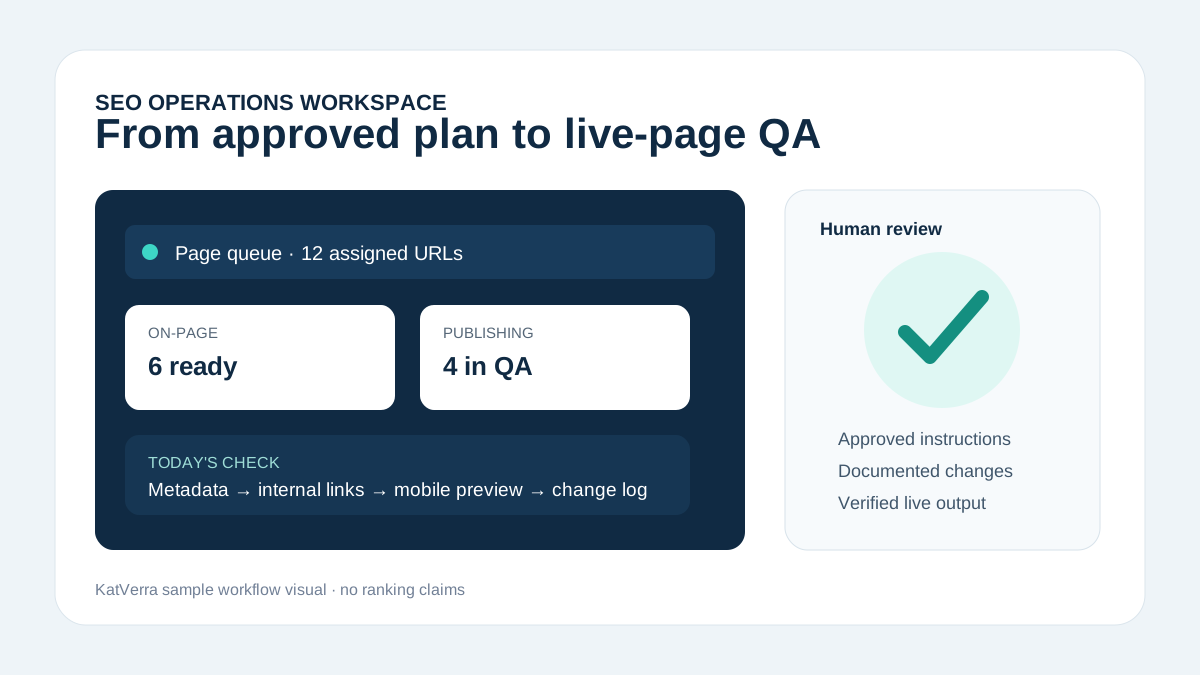
SEO plans often fail for a simple reason: the recommendations never make it into the website, content calendar, local listings or reporting workflow. A strategist can identify opportunities, but somebody still has to update pages, publish approved content, add internal links, maintain trackers and verify that each change went live correctly.
What is an SEO virtual assistant?
An SEO virtual assistant is a remote support professional who handles defined search-optimization tasks and recurring production work. The role can sit between an SEO strategist, content team and website administrator: taking approved instructions and turning them into organized, documented implementation.
KatVerra's commercial SEO virtual assistant service focuses on that execution layer. This guide explains what can reasonably be delegated, what should stay with a strategist or specialist, and how to build a workflow that is easier to review.
What tasks can an SEO virtual assistant do?
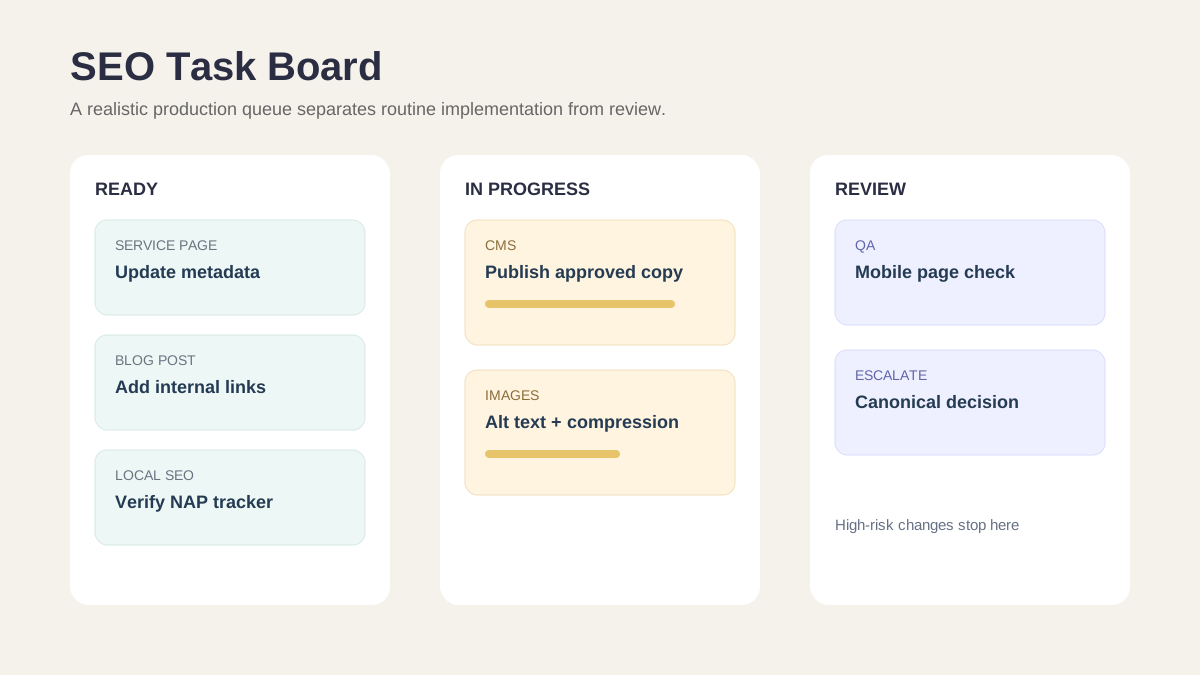
The exact scope depends on the person's experience and the systems a business already uses. The safest approach is to delegate repeatable tasks with clear inputs, expected outputs and review rules.
On-page SEO implementation
An SEO VA can update approved title tags and meta descriptions, adjust headings, add internal links, format existing copy, upload optimized images and maintain page-level checklists. The important word is approved: the VA should know which page is being changed, what the target intent is and whether another page already owns the same keyword cluster.
Content publishing and maintenance
Publishing is a strong delegation area because it contains many repeatable steps. A VA can prepare drafts in the CMS, format headings and lists, insert supplied images, add alt text, create internal links, check the slug, preview responsive formatting and schedule approved content.
Existing articles also need maintenance. The same review discipline used in a WordPress maintenance checklist can help keep publishing work organized without confusing routine upkeep with SEO strategy. That can include replacing outdated links, refreshing examples, updating dates when the content has genuinely been reviewed, adding new internal links and recording what changed.
Internal linking support
Internal links help users discover related information and help search engines understand relationships between pages. A VA can work from a keyword-to-page map or an approved list of destination pages and add contextual links where they are genuinely useful. This is safer than asking someone to insert the same commercial anchor text everywhere.
Local SEO production
For local businesses, delegated work can include preparing consistent business information, building citations within an agreed directory scope, maintaining listing trackers and organizing Google Business Profile assets where authorized. A local SEO checklist can provide a useful framework for recurring location-focused tasks. If citation production is a major requirement, it can be handled through a dedicated local citation service; the guide to what local citations are explains the NAP-consistency side of that work rather than mixing every local task into a general VA queue.
Reporting preparation
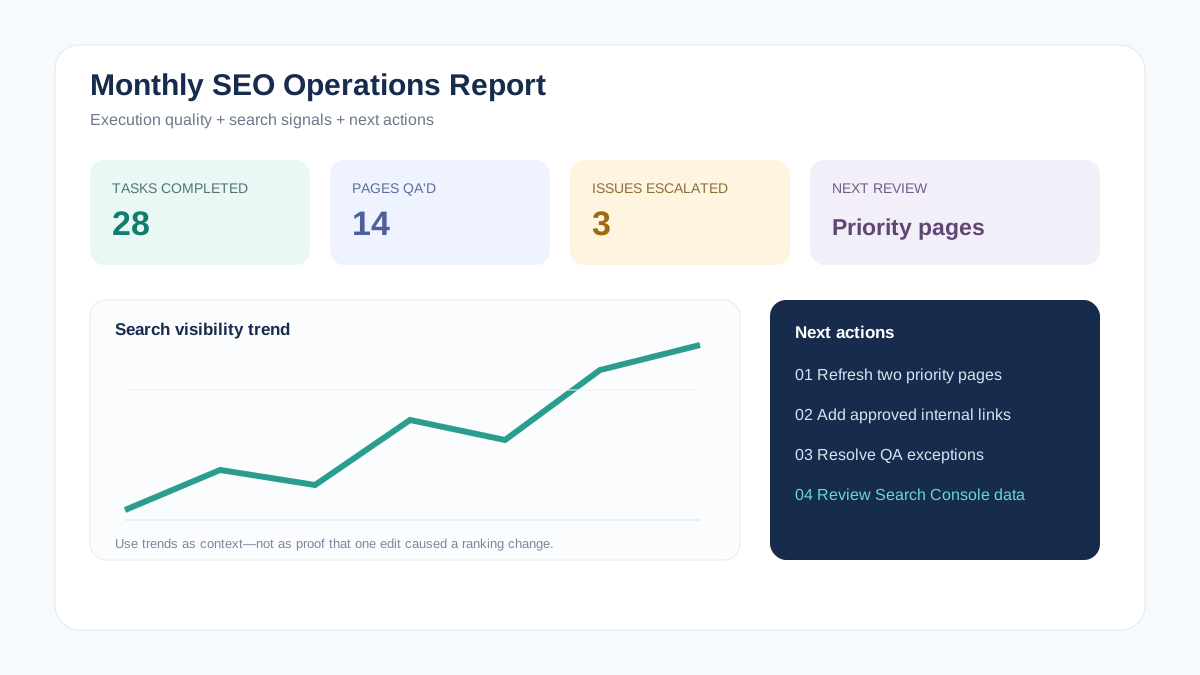
A VA can gather approved metrics, update recurring dashboards and prepare a change log so the business owner or SEO lead can spend more time interpreting results. Reporting support should distinguish between what the team changed and what happened afterward; it should not imply that a single edit caused every ranking or traffic movement.
What should not be delegated without specialist review?
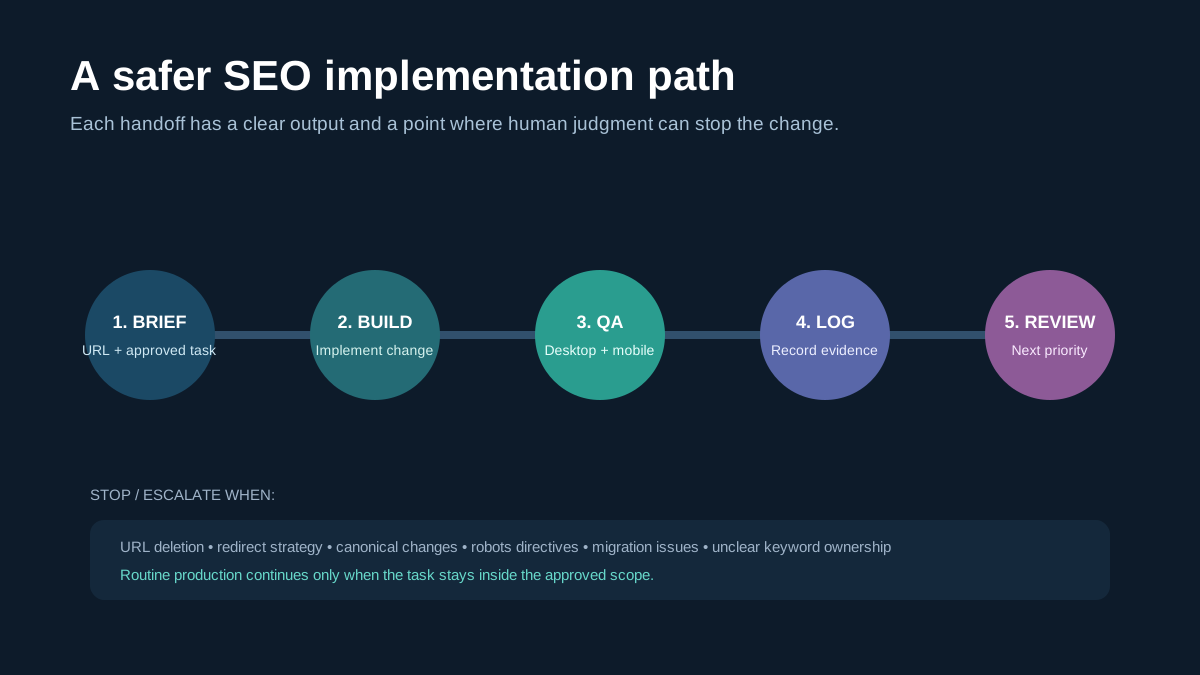
Not every SEO task belongs in a routine VA workflow. Site migrations, large redirect changes, robots directives, canonical strategy, JavaScript rendering problems, complex structured data, manual-action recovery and serious indexing issues can have site-wide consequences. These deserve an experienced technical owner and a rollback plan.
Keyword strategy also needs judgment. A VA can maintain the map and implement approved assignments, but creating several pages for the same search intent can cause unnecessary overlap. The goal is not to place a keyword everywhere; it is to make each useful page clear about the problem it solves.
SEO virtual assistant vs SEO specialist
The roles can overlap, but they are not automatically the same. An SEO specialist is typically responsible for diagnosis, prioritization and strategic recommendations. An SEO VA is often strongest at recurring execution: carrying those recommendations through the CMS, content workflow, listings and reporting system.
A small business may work with one person who has both skill sets, or it may separate strategy and implementation. For a broader delegation comparison, see virtual assistant vs employee. What matters is that responsibility is explicit. If nobody owns strategy, the VA is forced to guess. If nobody owns implementation, the strategy remains a document instead of becoming website improvements.
How to delegate SEO work without losing control
1. Give each task a specific URL or asset
“Improve SEO” is not a useful assignment. A stronger task might say: update the title and description on a specified URL using approved copy, add two named internal links, check the live page and record the completion date.
2. Keep a keyword-to-page map
A simple map shows which page owns each important commercial or informational intent. It helps writers, VAs and developers avoid creating competing pages accidentally. KatVerra uses this same principle when building supporting resource content around service pages.
3. Define what requires approval
Routine formatting may not need the same approval as changing a URL, deleting a page or modifying a site-wide template. Create a short escalation list so the VA knows when to stop and ask rather than improvising.
4. Require completion evidence
A useful completion note can include the live URL, date, changes made and any exception discovered. For larger batches, a shared tracker makes QA easier and reduces repeated checking.
What tools might an SEO VA use?
The toolset should follow the workflow rather than become the service itself. Common environments include WordPress or another CMS, spreadsheets, project-management tools, analytics and search-performance platforms, cloud storage and communication systems. Access should follow least-privilege principles: give only the permissions required for the assigned work.
AI tools can assist with organization, drafts and repetitive processing, but generated output still needs human review. Search-facing copy, business facts and website changes should not be published merely because an automated tool produced them.
How much SEO work should you delegate?
Start with a narrow recurring queue. For example, a business might delegate publishing two approved articles, refreshing several existing pages, checking internal links and preparing a monthly report. Once the workflow is predictable, additional tasks can be added without making ownership unclear.
This is also why hourly capacity and fixed deliverables solve different problems. Recurring mixed tasks may fit an ongoing support arrangement, while a defined citation batch, dashboard build or website project may be easier to scope separately.
How to measure whether the support is working
First measure execution quality: were tasks completed accurately, on time and with useful documentation? Then review search performance in context. Search Console can show impressions, clicks, queries and indexed pages; analytics can show what visitors do after arriving. Local businesses may also review Business Profile activity and actual enquiries.
Rankings can vary by location, device, personalization and competition, so they should not be treated as the only measure of success. A good operational workflow makes it easier to connect the team's actions with later performance without pretending that SEO outcomes are guaranteed.
SEO virtual assistant checklist
- Define the pages and business goals that matter.
- Keep an approved keyword-to-page map.
- Write tasks as specific changes, not vague ranking goals.
- Separate routine implementation from specialist decisions.
- Use a review step for search-facing content and higher-risk edits.
- Maintain a change log with live URLs and completion dates.
- Back up or stage changes that could affect templates or site behavior.
- Review search performance alongside leads, enquiries or other business outcomes.
When does hiring an SEO VA make sense?
SEO VA support is a practical fit when a business already knows what needs to be done but lacks consistent implementation capacity. It can also help an agency or consultant that wants to spend less time on CMS updates, publishing, trackers and recurring production.
If the main problem is that nobody knows why traffic dropped, which pages should target which topics or how a migration should be handled, start with specialist diagnosis instead. Implementation support becomes much more valuable once the direction is clear.
Turn the SEO plan into a repeatable workflow
The strongest reason to use an SEO VA is not to “outsource rankings.” It is to create dependable execution around the parts of SEO that require consistent follow-through. With clear priorities, documented tasks and human review, a business can move more approved work from the backlog to the live site.
If that is the gap in your current process, review KatVerra's SEO virtual assistant services for on-page implementation, publishing, local SEO production and reporting support.